A buyer walks two adjacent lots in Angel Fire, likes the elevation and the tree cover, and works out the obvious plan: buy both, combine them into a single buildable parcel, build one house. One address, one deed, one annual assessment. That is how it works almost everywhere else.
It is not always how it works here.
Angel Fire Resort's own real estate guidance is direct about this: certain platted lots carry a deed restriction that keeps the annual membership assessment attached to each original lot, even after the Village approves a lot combination for building purposes. Combine two lots into one buildable homesite, and you may still owe two separate assessments, indefinitely, because the obligation was never written to follow the parcel. It was written to follow the plat.
That single fact is worth understanding before you write an offer on adjoining Angel Fire lots, because it changes what "combining" actually buys you.
Where the Rule Comes From
Angel Fire Resort's assessment structure did not start as a typical HOA fee schedule. It grew out of a Chapter 11 bankruptcy reorganization. The resort's original owner filed for bankruptcy protection in 1993, and the reorganized entity that emerged, Angel Fire Resort Operations, took on the resort's assets under an Amended Joint Plan of Reorganization. The Association of Angel Fire Property Owners, known as AAFPO, was formed in 1995 as part of that same reorganization to represent property owners in their dealings with the resort over dues and amenity access.
That history matters because it means the assessment obligation is not a simple community covenant that a developer wrote once and forgot. It is a court-supervised financial structure, tied to specific subdivisions like Angel Fire Chalets, Angel Fire Country Club, and Monte Verde Lake Subdivision, each with its own recorded declaration. AAFPO's own document archive lists dozens of these declarations by subdivision and unit, and they are not identical to one another. A restriction that applies to a lot in one unit of the Country Club subdivision does not necessarily apply the same way in Angel Fire Chalets.
The obligation has also been tested in court. In Home and Land Owners, Inc. v. Angel Fire Resort Operations, L.L.C., a group of property owners sued the resort in 1998 over changes to amenity access rules, and the case worked its way through New Mexico's court system before the Court of Appeals ruled in 2003. The opinion confirms what the assessment structure actually is: an annual fee tied to the nature of the property, residential or commercial, developed or undeveloped, running with specific parcels under recorded restrictive covenants. This is not a homeowners association that can waive itself out of a fee dispute over a phone call. It is a structure with a bankruptcy court's fingerprints on it, later interpreted by an appellate court.
What Combining Lots Actually Changes, and What It Doesn't
Here is the distinction that trips people up. There are two separate processes at work when someone combines lots in Angel Fire, and they solve two different problems.
The Village of Angel Fire has its own lot combination procedure, which deals with the tax parcel and the building permit. Get that approved, and the county treats your two lots as one for purposes of assessment on the tax roll and for issuing a single building permit.
Angel Fire Resort has a separate lot combination policy that deals with the membership assessment, and it does not automatically follow the Village's decision. The resort's own guidance urges anyone considering a combination to check with the membership office first, because certain lots are deed-restricted to require the annual assessment on each original lot regardless of combination. Two administrative systems, two different questions, and only one of them tells you what your dues bill will look like next spring.
| Layer | What a Combination Changes | What It Doesn't |
|---|---|---|
| Village of Angel Fire | Tax parcel becomes one lot; a single building permit can be issued | Nothing about resort membership obligations |
| Angel Fire Resort / AAFPO | Nothing automatically | Deed-restricted lots can keep two separate annual assessments attached to the original plats |
For a buyer, the dollar version of this looks like: if both lots carry the deed restriction, you are not paying one Base assessment. You are paying it twice, every year, before a single shovel goes into the ground. Published Base dues for the 2025-26 membership year, which ran from May 2025 through April 2026, were $1,695, up from $1,640 the season before. That kind of year-over-year movement is normal for this assessment, which means a dual-assessment lot doesn't just cost double today. It costs double at whatever the rate happens to be when the bill arrives, and that obligation does not disappear when the county records your combined parcel. We covered how Base and Platinum dues actually break down for Angel Fire owners in our guide to the Angel Fire condo market, and the same tiered structure applies whether you are buying a finished condo or two raw lots.
The Same Pattern Shows Up at the Village Line
This is not an isolated quirk. It shows up again in a different form for anyone looking at property in Angel Fire's Country Club subdivisions.
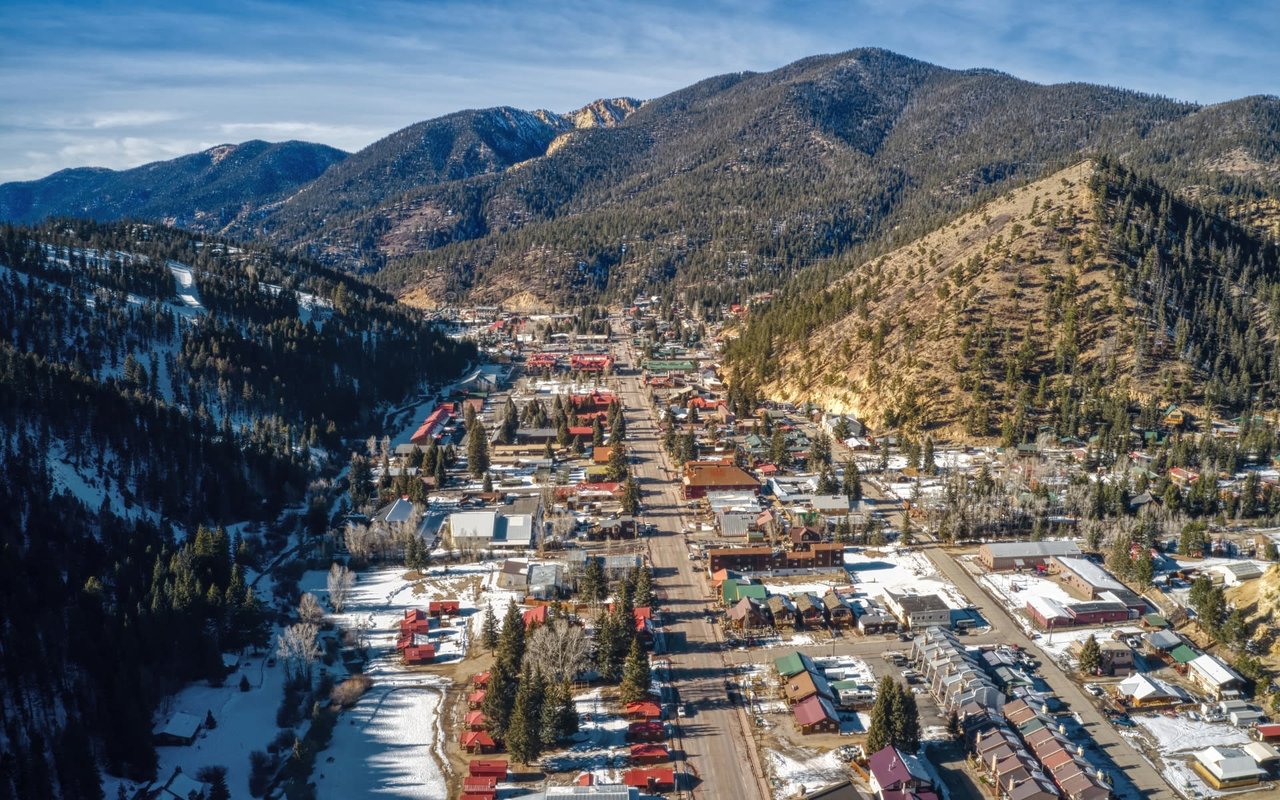
Those subdivisions were annexed into the Village of Angel Fire in 1998, which means the Village now handles the services you would expect from any municipality: road maintenance, water and wastewater, recycling, trash pickup. A buyer could reasonably assume that being inside Village limits settles the question of what governs the property.
It doesn't. The Country Club subdivisions remain separately bound by the resort's own restrictive covenants, meaning AAFPO membership and the annual assessment still apply on top of whatever the Village provides. Being inside the Village boundary answers the services question. It does not answer the assessment question. Those are two different lines drawn on two different maps, and they don't move together just because one of them changed in 1998.
The lesson underneath both of these examples is the same. In Angel Fire, an administrative change, a lot combination approved by the Village, an annexation into municipal limits, tells you about one layer of the property's obligations. It rarely tells you about all of them.
What to Confirm Before You Sign
If you are under contract on adjoining Angel Fire lots, or evaluating a property inside a Country Club subdivision, a few concrete steps protect you before closing rather than after.
- Ask the Angel Fire Resort membership office directly whether the specific lots you are buying are deed-restricted to require a separate assessment even after combination. This is not information you can reliably infer from a listing sheet.
- Get that answer in writing, and keep it with your closing file. Verbal assurances from a seller or a general FAQ page do not bind the resort.
- Confirm the deed restriction status before you waive any lot-combination contingency in your purchase agreement, not after.
- If you are buying inside a Country Club subdivision, verify separately whether the property carries AAFPO membership obligations in addition to whatever Village services apply. Annexation history does not settle this.
- Remember that assessments are pro-rated and due on a clock that starts at closing. Angel Fire Resort's membership rules require pro-rata assessments to be paid within 30 days of the date of closing or recording, after which penalties and interest apply. That is not a bill you can let sit while you settle into a new build.
None of this means combining lots in Angel Fire is a bad idea. Plenty of owners do it successfully every year, and a larger combined homesite is often exactly what a buyer wants. It means the financial outcome of that decision depends on paperwork specific to your two lots, not on a general rule you can assume applies the same way it did for the neighbor down the road.
A Few Direct Questions
Does this only apply to raw land, or can it affect a lot with an existing home? The deed restriction language speaks to lots, not to whether a structure exists. A developed lot combined with an adjoining vacant lot can carry the same dual-assessment exposure if the underlying restriction applies to both parcels.
If I buy a property just outside the Angel Fire Resort boundary, does any of this apply? No. This entire structure is specific to lots inside the resort's membership area under the bankruptcy reorganization plan and its recorded covenants. Property outside that boundary is not subject to AAFPO membership or the annual assessment, though it will have its own set of local rules worth confirming separately.
Who do I actually ask to get a definitive answer? The Angel Fire Resort membership office, not a general FAQ page or a seller's representation. Ask specifically whether the plat numbers you are buying carry the dual-assessment deed restriction, and request that answer in writing before you remove contingencies.
Angel Fire rewards buyers who read the fine print on lot restrictions the same way it rewards buyers who read the fine print on ski conditions: closely, and before you commit. If you are weighing adjoining lots, a Country Club property, or any other Angel Fire purchase where the assessment structure isn't obvious from the listing, The Hoffmann Team can help you get the right answers from the right office before you're under contract, not after.