Does signing New Mexico's standard property disclosure form mean you're protected? For most home purchases, close enough. For an adobe home in Taos, the answer depends entirely on what you think that form is doing for you.
According to Hey Taos, New Mexico's statewide disclosure form, the one Realtor associations use across the state, does ask sellers to report structural, mechanical, electrical, and plumbing issues, along with the water supply type, well permit status, and any known water rights tied to the property. That sounds thorough, and for a conventional frame house in Albuquerque or Santa Fe it usually is. But the form runs on the seller's memory and honesty. It is not an inspection, and it was never built to verify anything on its own. Buyers coming from states with more aggressive mandatory disclosure laws tend to read more certainty into this document than New Mexico law actually puts there.
That gap matters everywhere in the state. In Taos, it matters more, because three things routinely fall outside what the form can catch: whether the house is actually adobe, what moisture has already done to it, and what the water rights attached to the land really obligate you to do.
What The Form Covers, And What It Doesn't
Here's the practical breakdown, based on how the standard form and the underlying New Mexico Real Estate Disclosure Act actually function versus what a buyer might assume walking in:
| What buyers often assume | What actually happens |
|---|---|
| The form verifies the seller's claims | It relies entirely on the seller's own knowledge and honesty |
| The disclosure substitutes for an inspection | It is not an inspection and does not replace one |
| Water rights are confirmed through title insurance | Standard title searches typically do not cover water rights the way they cover the land itself |
| An attorney reviews the transaction | New Mexico does not require one, and most closings happen at a title company with no attorney involved |
| A general home inspector can evaluate an adobe structure | Adobe-specific risks require an inspector with adobe experience, not a generalist |
None of this means the process is unsafe. It means the burden of verification sits with the buyer, and in Taos that burden is heavier than it looks on the form itself.
The House Might Not Be What You Think It Is
Before any of that matters, you have to answer a more basic question: is the house actually adobe?
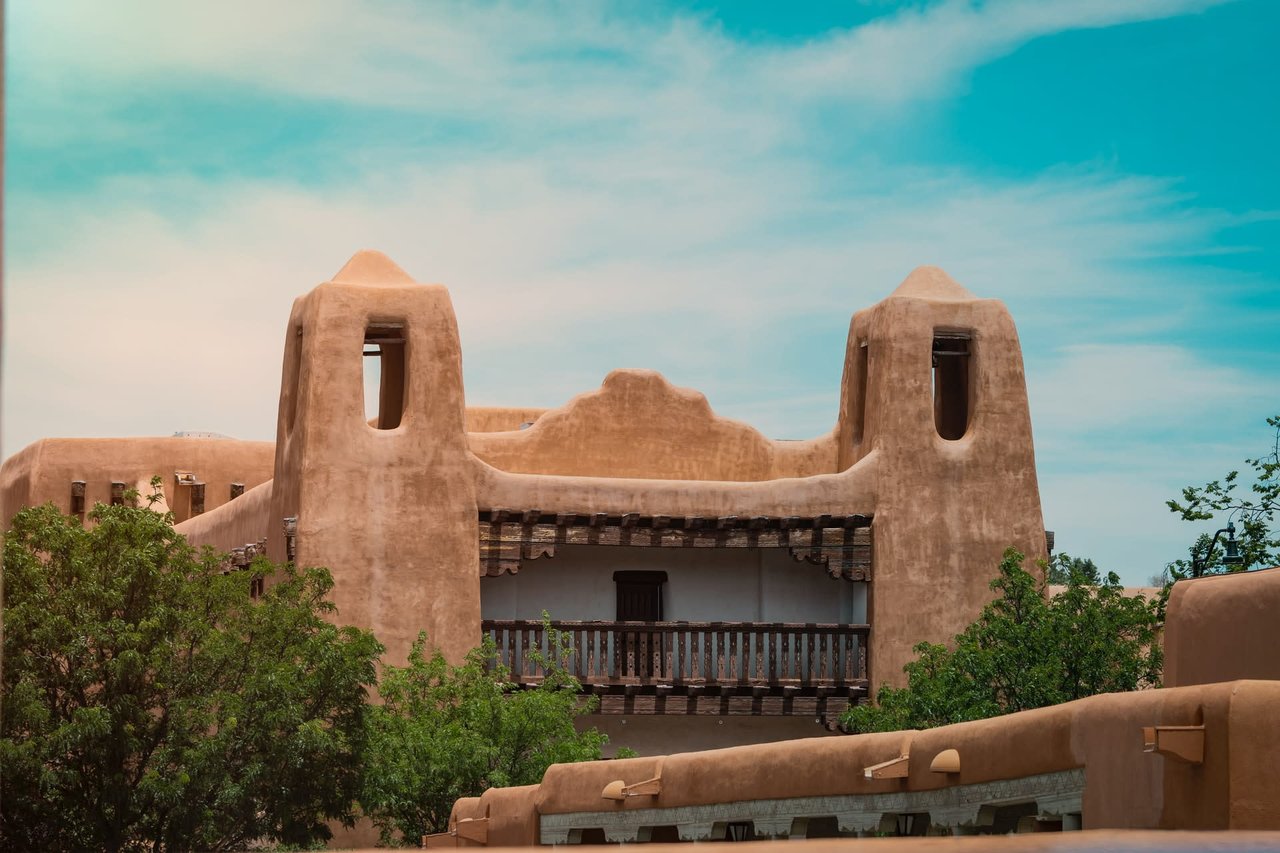
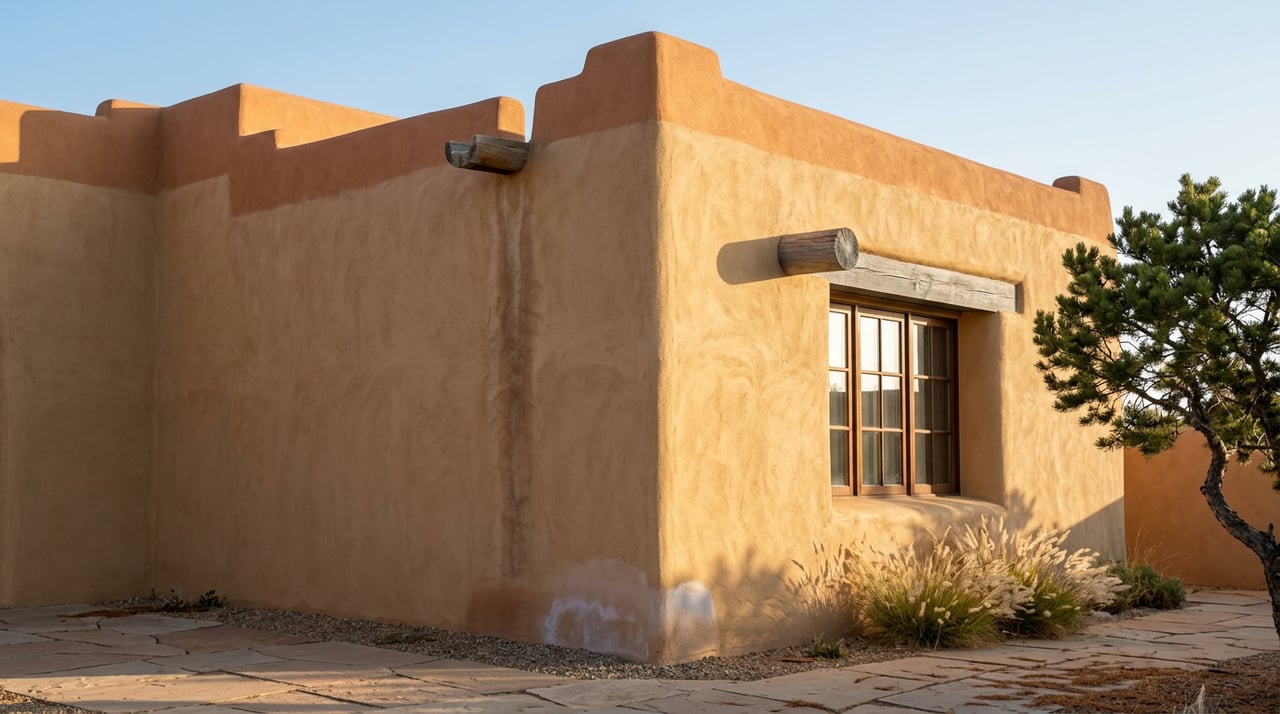
A meaningful share of what reads as adobe in Taos is stucco applied over wood frame or concrete block, built to look the part without being the part. That distinction is not cosmetic. Stucco-clad construction inspects and behaves completely differently than true earthen adobe brick, and the difference shows up in how the walls handle moisture, how they're repaired, and how insurers and lenders treat them. Find out which one you're buying before you get attached to the house, not after you're under contract.
True adobe brings its own physics. Adobe itself does not fail on its own. It fails from water. The material is porous, and moisture that gets in through poor drainage, a failing roof, or ground dampness wicking up through the foundation is the risk every adobe-specific inspection is built to catch. Left alone, that moisture shows up later as plaster erosion, wall slumping, bowed floors, or structural softening, none of which a standard inspector trained on conventional framing is necessarily equipped to identify.
What An Inspector Who Knows Adobe Actually Checks
This is the single most consequential decision a Taos adobe buyer makes during the inspection period: hiring someone who has actually inspected adobe before, not just a general home inspector working outside their usual scope. Ask directly about their adobe experience, and ask them to specifically walk through:
- Plaster and wall surfaces, checked for hollow-sounding spots, bulging, erosion, or large cracks
- The roof and parapet, checked for water pooling and drainage failures
- Vigas and lintels, checked for rot or pest damage
- The foundation and stem wall, checked for moisture wicking up from the ground
- The sewer line, using a sewer scope, since aging sewer lines are a documented issue in older Taos properties
That last item surprises a lot of buyers. A sewer scope isn't standard on every inspection checklist nationally, but on an older Taos property it belongs on yours.
Water Rights Need More Than the Disclosure Form
The disclosure form asks sellers to report known water rights, but knowing about a right and understanding what it obligates you to do are different things. If a property comes with acequia water rights, the real question isn't whether access exists. It's what the ongoing responsibilities are.
The New Mexico Office of the State Engineer reports that the Taos Valley Acequia Association represents 55 member acequias in the region. Those relationships are managed communally, closer to a shared responsibility with your neighbors than a utility bill you can ignore.
The bigger surprise is what title insurance leaves out. A standard title search and title insurance policy typically do not cover water rights the way they cover the land itself. If water rights matter to your purchase, and in Taos they usually do, that is a direct conversation to have with your title company before closing, not an assumption to carry into it. Split mineral estates or anything unusual on title are exactly the situations where paying for a real estate attorney, optional under New Mexico law, earns its cost.
The scale of what's actually being managed here is worth understanding too. The 2013 Taos Pueblo Water Rights Settlement Agreement brought together the Taos Pueblo, the State of New Mexico, the Taos Valley Acequia Association, the Town of Taos, El Prado Water and Sanitation District, and twelve Mutual Domestic Water Consumer Associations to resolve water rights claims across the Rio Hondo and Rio Pueblo de Taos systems. That agreement didn't simplify water in the Taos Valley. It formalized just how many parties have a stake in it, which is part of why a generic real estate background doesn't prepare anyone for the water questions that come up here.
Insurance And Financing Follow The Same Rule
Everything above eventually shows up in two places buyers don't think about until they're already under contract: insurance and financing.
Carriers underwrite historic or earthen construction differently than conventional homes, and some require an additional inspection or apply different replacement-cost assumptions before they'll write a policy at all. Lenders can require repairs or a specialist structural evaluation before closing, particularly on unreinforced adobe. Get an insurance quote early in your process, not after you're already committed, because insurability and financing can both hinge on what an adobe-specific inspection turns up.
For buyers looking at larger acreage rather than an in-town adobe, the water questions get even more layered, from surface rights and well permits to agricultural valuation and access. The Hoffmann Team's guide to buying ranch and acreage in Taos walks through that due diligence in more depth.
Questions Worth Asking Before You're Under Contract
Why is an inspection important for a Taos adobe? On an adobe property, it's close to essential given how differently the material behaves from conventional framing.
Do I need a real estate attorney to close in Taos? Most transactions close at a title company without one. Water rights questions, split mineral estates, or unusual title issues are the situations where hiring one makes sense.
What is la limpia? It's the community ditch cleaning. Reviewing bylaws and delivery history matters before you buy.
Buying an adobe home in Taos rewards patience during the inspection period more than almost any other property type in the market. The house that looks perfect from the street can still surprise you at the stem wall, and water rights that sound simple in a listing description deserve a closer look before you buy. An agent who has actually closed adobe deals here knows which inspectors to call, which disclosure answers are routine, and which ones deserve a second look before you're emotionally attached to the property.
If you're weighing an adobe purchase in Taos and want a team that has been through this exact due diligence process before, The Hoffmann Team can walk you through it. Search Our Listings to see what's currently available across Taos and the Enchanted Circle.
This article is general information, not legal, tax or financial advice. Consult a qualified professional about your situation.