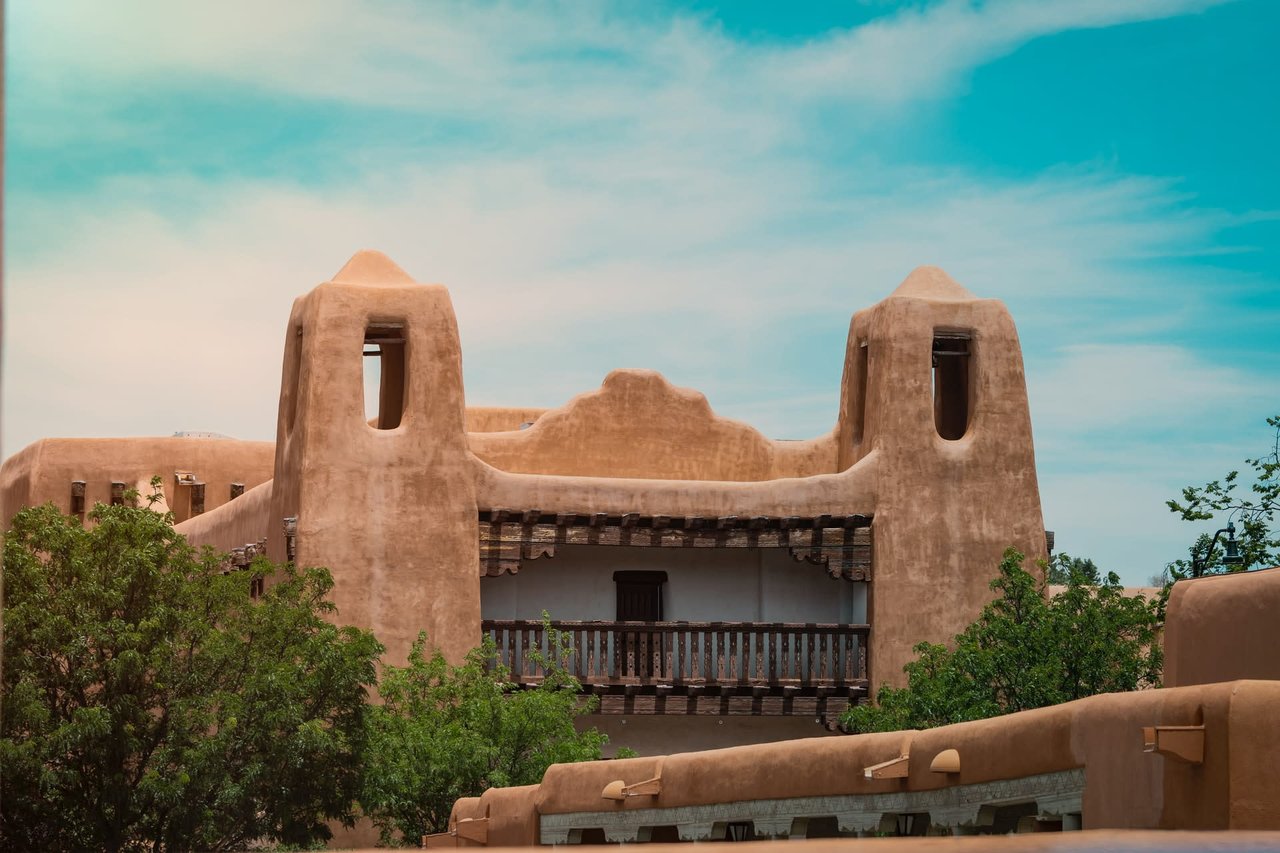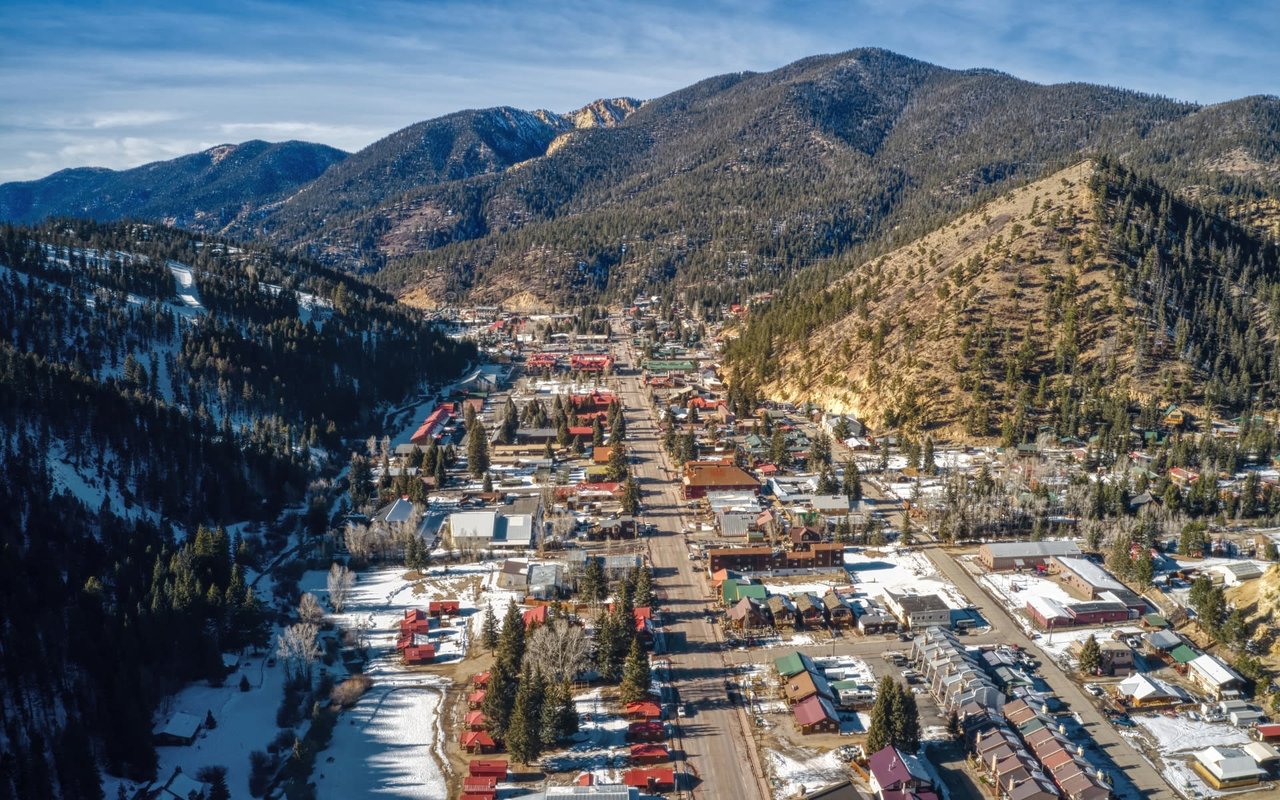
Ask someone who just moved to Taos where to catch the big farolito walk on Christmas Eve, and they'll probably start looking up driving directions to Santa Fe. Ask someone who has spent five or six Decembers here, and they'll tell you to stay put. The walk everyone's heard about, the one with thousands of paper-bag lanterns lining a mile of adobe walls, belongs to Canyon Road in Santa Fe, a good hour-plus drive south. Taos runs its own season, on its own streets, on a different schedule, and it doesn't peak with a single famous walk. It peaks at the Pueblo.
That distinction matters if you live here, because the local Yuletide calendar has a shape to it: a dense two-week stretch in early December, a quieter middle, and then a Christmas Eve that plays out almost entirely inside Taos Pueblo rather than on a gallery-lined street. Knowing the sequence is the difference between missing the good stuff and building your December around it.
The two weeks everyone means when they say "Yuletide"
Locally, "Yuletide in Taos" isn't one event. It's the name given to the whole run of early-December traditions that open the season, most of them clustered within about ten days of each other.
| Event | Where | What makes it distinct |
|---|---|---|
| Taos Plaza Yuletide Tree Lighting | Taos Plaza | Marks the season's official start |
| Bonfires on Bent Street | John Dunn Shops and Bent Street merchants | A tradition running almost 40 years |
| Lighting of Ledoux Street | Ledoux Street, ending at the Harwood Museum | Historic narrow street lit entirely by farolitos and bonfires |
| Taos Pueblo Winter Market | Taos Pueblo | Marked its fourth year this past December, keeping shopping inside the Pueblo economy |
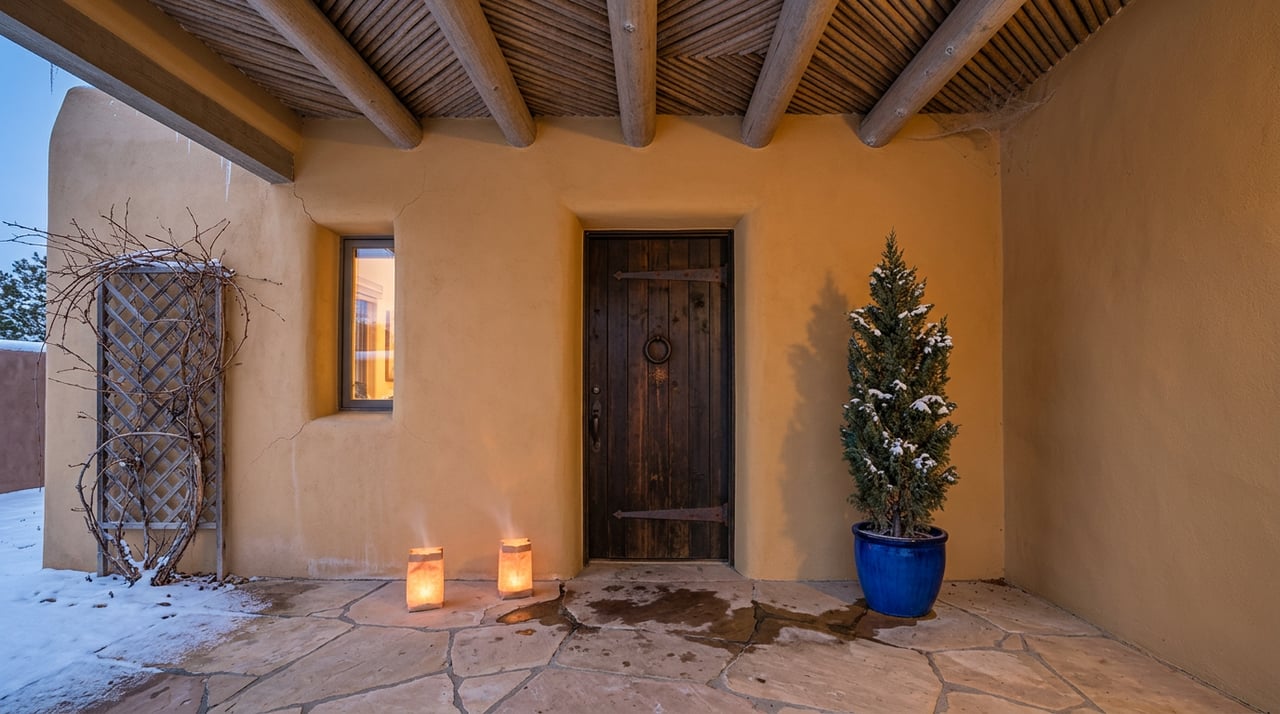
The Town of Taos Christmas season officially starts with the Yuletide Tree Lighting on Taos Plaza at the beginning of December, and from there the calendar moves fast. Bonfires on Bent Street, hosted by the John Dunn Shops and Bent Street merchants, has been a Taos staple for close to four decades, with bonfires and farolitos lighting the sidewalks while shops stay open late with hot drinks and snacks. A few days later, the Lighting of Ledoux Street turns that historic block into a walk-through gallery crawl, most recently held the evening of December 5, 2025, with the narrow street glowing under farolitos, luminarias, and bonfires while galleries and museums stay open late for food and drink, ending at the Harwood Museum.
Underneath the string lights and hot cider, the Pueblo Winter Market does something different. Hosted by Taos Pueblo Recovery Works, it marked its fourth year running this past December, and it exists specifically to keep holiday dollars circulating inside the Pueblo community during the stretch of winter when tourist visits to the Pueblo itself slow down. If you're shopping local in December, that market is where "local" means something more specific than a slogan.
Why the famous farolito walk isn't the Taos one
Here's where the confusion sets in for anyone new to the area. When people search "farolito walk New Mexico," what they usually find is Canyon Road, and for good reason: it's one of the region's most photographed holiday traditions, with thousands of lanterns turning a historic gallery street into what regional coverage calls a glowing corridor every Christmas Eve. It draws crowds thick enough that streets near Canyon Road close to vehicles and nearby parking lots fill early.
Taos has its own version, but it's smaller, earlier, and spread across two separate nights rather than concentrated into one mega-event on December 24. Ledoux Street gets its evening in early December. Bent Street gets its own night around the same window. Neither one is trying to be Canyon Road, and neither one happens on Christmas Eve itself. That's the piece that trips people up: if you're waiting for Taos's farolito walk to happen on the 24th, you'll be waiting for something that isn't scheduled. By the time Christmas Eve actually arrives, the town's attention has already shifted somewhere else entirely.
Where Taos actually spends Christmas Eve
That somewhere else is Taos Pueblo. Just after mass at dusk on Christmas Eve, riflemen signal the start of the procession, and a statue of the Virgin Mary is carried on a raised dais from the chapel into the Pueblo plaza, accompanied by Pueblo drummers, dancers, and singers performing in both English and Tiwa. Bonfires are lit as the procession moves through, and the evening continues around them.
This isn't a performance staged for an audience, and the Pueblo is explicit about the etiquette expected of anyone attending: these are religious ceremonies, so visitors are asked not to talk or move around during dances, not to applaud, and not to ask for explanations mid-ceremony. Photography and recording are prohibited, and the Pueblo enforces a strict confiscation policy for anyone who tries. If you've lived in Taos a while, you already know this. If you haven't, it's worth knowing before you bring out-of-town family along for what they might assume is just another photo-friendly holiday event.
The slopes have their own Christmas Eve, too
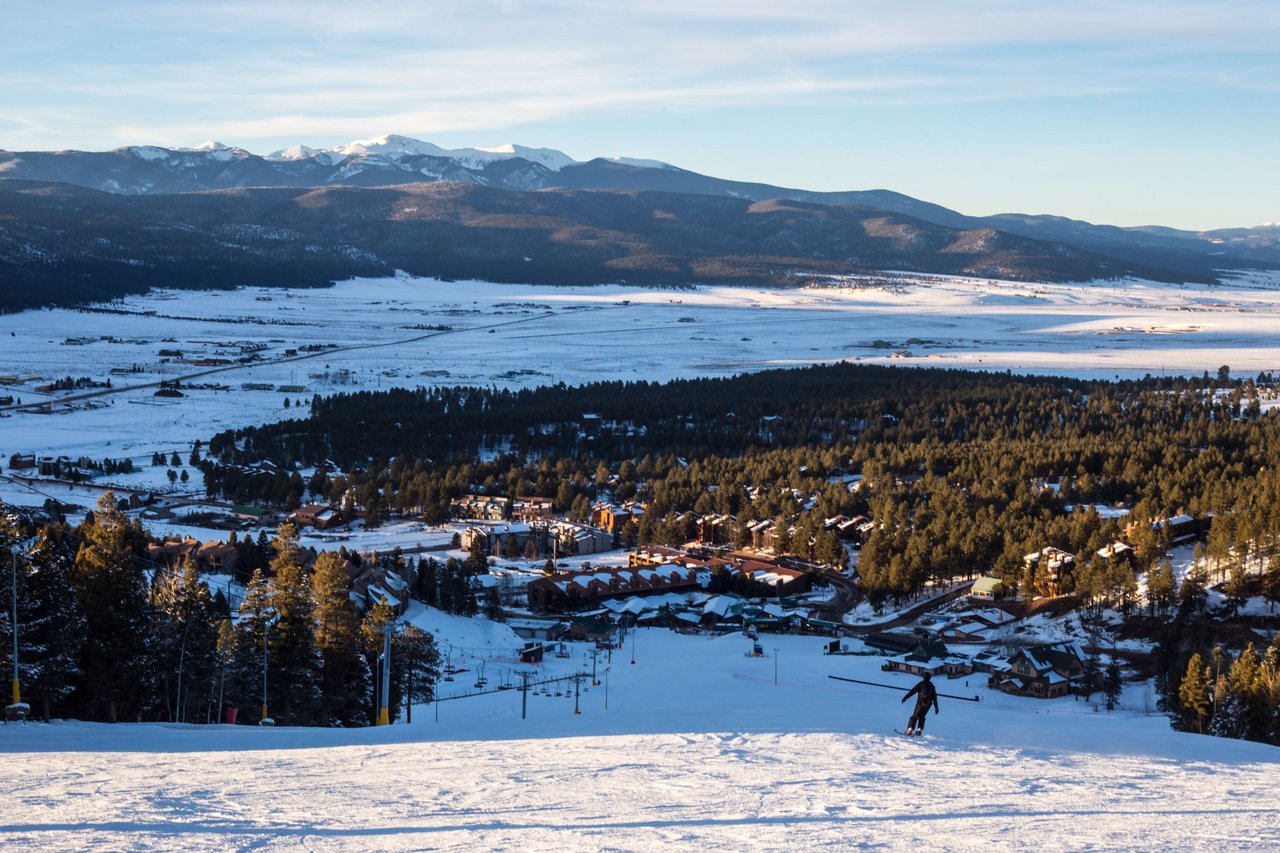
There's a second Christmas Eve tradition running in parallel, and it happens above town rather than in it. Skiers at Taos Ski Valley, Angel Fire, Sipapu, and Red River all carry lights down the slopes on Christmas Eve, a shared torchlight tradition across the Enchanted Circle's ski areas rather than something unique to any single resort. If your household splits between a Pueblo Christmas Eve and a mountain one, that's not an either-or in most years. The timing on the slopes tends to fall in the early evening, well before the Pueblo procession gets underway after dusk.
What changed on the mountain last season, and what carries forward
For anyone holding a season pass, the mountain itself changed shape last season in ways still worth knowing before the lifts start turning again this fall. Taos Ski Valley marked its 70th anniversary during the 2025-26 season with a new chairlift and base area upgrades, the most visible of which was the replacement of Lift 7, originally built in 1984, with a new triple chair and a completely regraded Maxie's run. The resort also added RFID gates at Lifts 1, 4, Pioneers, and Rueggli, letting reloadable cards scan through automatically instead of requiring a ticket check at each stop. None of that was a one-season novelty. It's the mountain skiers will find waiting for them again this winter.
The 2025-26 season ran from November 27, 2025 through March 29, 2026, closing about a week earlier than planned because of unseasonably warm temperatures late in the season. The resort has confirmed the 2026-27 season will run from November 26, 2026, with pricing still to be announced. Taos Ski Valley also rolled out pass assurance for the first time this spring, a policy that lets 2026-27 passholders get a full refund if they cancel before October 31, 2026, or partial credit for passes returned between November 1, 2026 and March 1, 2027, effectively removing the risk of buying early and getting burned by a dry winter. As CEO John Kelly put it when announcing the program:
"Our Spring Pass Sale has always been the best time to lock in a Taos season pass, and this year we're raising the bar."
For locals who ski more than a handful of days a season, that early-close from last winter is the more useful data point than any marketing line. It's a reminder that a posted end date is a plan, not a guarantee, in a region where a warm February can shorten the season by a week without much warning.
Why the order matters if you live here
None of this is a bucket list. It's closer to a map of where the town's attention moves across six weeks. Early December belongs to Bent Street and Ledoux Street, when the historic district turns into a walkable string of open shops and bonfires. The Pueblo Winter Market fills in the quieter stretch that follows, keeping December commerce inside the Pueblo rather than routing it exclusively through downtown storefronts. And Christmas Eve itself splits between two places at once: the mountain, where four resorts run the same torchlight tradition within hours of each other, and the Pueblo, where a religious procession that predates the ski industry by centuries still sets the tone for how the town closes out the year.
Understanding that sequence is part of what it means to actually live somewhere instead of visiting it. The Farolito Walk everyone's heard of is real, it's just a drive south down to Santa Fe. What happens here, from the first bonfire on Bent Street to the last drummer at the Pueblo plaza, is a different tradition entirely, and it doesn't need to borrow Santa Fe's name to be worth planning your December around.
If this is the kind of place you're already tracking the seasons of, whether you're settled in or thinking about what comes next here, The Hoffmann Team knows Taos block by block and season by season. Search our listings to see what's available across Taos, Angel Fire, and the rest of the Enchanted Circle.